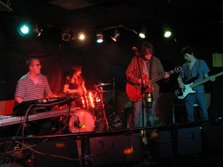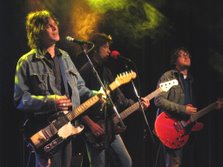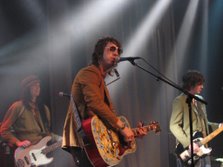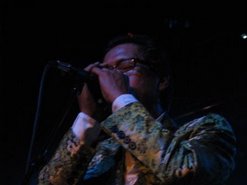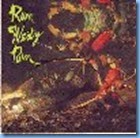


(photos courtesy of Twin/Tone.com, Daniel Corrigan, Steve Cohen, PDL, David Poe, Karla Ludzack, Rob Haire’s dormant RWR fan site and other anonymous photographers)
Run Westy Run was one of the great Twin Cities bands of the 80s, but decades later, in retrospect, they tend to get lost in the glare of an effervescent Minnesota music scene at the time that had no shortage of bright lights: The Replacements, Husker Du, Soul Asylum, The Jayhawks, Prince, Flyte Tyme, plus countless other sparkling contenders, many now lost to the sands of time. They were formed in 1984 by 3 brothers from St. Louis Park - Kirk, Kyle and Kraig Johnson - along with Terry Fisher and Bob Joslyn, and were named, apparently, after a 1966 children's book of the same name. RWR was formed during a period in Minnesota music history when new bands were coming and going at a dizzying rate. Indeed, various RWR members had served time in the early 80s in long forgotten outfits like The Young Cherrys, The Portables and The Tusslers. Kyle was gone by 1994 and the rhythm section underwent several changes but the band soldiered on until 1998. Their recorded output, however, was quite scarce: 3 LPs (2 on SST; 1 on Restless-Twin/Tone), 1 mini-album, 1 EP and 2 singles. Their last full length album was released in 1990, so the final several years of the band's tenure were poorly served by official releases; dozens of original songs that were performed live during that time fell through the cracks.
They started out as an intensely chaotic, Stooge-y hard rock band, later evolving into a hard-to-define amalgam of indie, rock, roots, punk and funk, driven by a ferocious, lusty energy that infected any live audience they came in contact with. Their studio output was the proverbial mixed bag (producers included Grant Hart and Peter Buck) but their reputation as a live band is legendary; their enduring legacy has largely been defined by what happened on stage rather than in the studio. The "Westies," as they soon became known, are widely considered by many aficionados to be one of the premier live acts of a very memorable period in MN music history. After The Mats, Huskers and Soul Asylum moved on to bigger venues, the Westies practically ruled the Minneapolis club scene in the late 80s/early 90s with a series of incendiary sweat fests that fans continue to drool over to this day. The image of Kirk hanging upside down from the rafters of the Entry while the band roared behind him in front of a packed house is indelibly stamped in the memories of more than a few RWR fans from those golden times.
After a move from SST to the hometown Twin/Tone label, RWR released their third album in four years and continued to plug away during the early 90s, performing regularly at home and touring frequently. For a variety of reasons, however, they had a difficult time maintaining momentum - or recording contracts. The Westies did end up signing with A&M in in the mid-90s and extensive recordings were done at a variety of locations (Pachyderm Studios, New Jersey, various rehearsal spaces) but, save for a few compilation tracks and Cockroach Park - essentially a self-released 7 song sampler that likely would've been the core of a proposed 4th RWR album - the bulk of those sessions remain unreleased, including a lost complete album recorded for A&M and produced by Joe Blainey.
After a move from SST to the hometown Twin/Tone label, RWR released their third album in four years and continued to plug away during the early 90s, performing regularly at home and touring frequently. For a variety of reasons, however, they had a difficult time maintaining momentum - or recording contracts. The Westies did end up signing with A&M in in the mid-90s and extensive recordings were done at a variety of locations (Pachyderm Studios, New Jersey, various rehearsal spaces) but, save for a few compilation tracks and Cockroach Park - essentially a self-released 7 song sampler that likely would've been the core of a proposed 4th RWR album - the bulk of those sessions remain unreleased, including a lost complete album recorded for A&M and produced by Joe Blainey.
By 1995, RWR activity had slowed to a crawl and remained that way until 1998, save for the occasional gig at the 400 Bar or First Ave. Kraig was undoubtedly sidetracked by his membership in Golden Smog and their transformation from a jokey Minneapolis cover band to a bona fide signed act, which resulted in two seminal albums with new Smogger Jeff Tweedy (Wilco, Uncle Tupelo) in 1995 and 1998 and accompanying national tours. Kraig also joined the post-Olson Jayhawks full time in early 1997, further limiting his time with RWR (Jayhawks side note: in the early 80s Kirk played with future Jayhawk Mark Olson in The Young Cherrys). During this period, RWR setlists contained very little material from the 80s era of the band and there was a noticeable shift in their sound, presaging the next chapter of the RWR story. The last official RWR releases were in 1994-5: the David's Drum EP and the now hard-to-find Cockroach Park mini-album, which quickly became a fave amongst the lucky fans who managed to obtain a copy.
With Kraig hitching his wagon to The Jayhawks, So-So (later Iffy) started initially as a RWR side project in 1997 with Kirk and Tommy Merkl (Nova Mob) as core members before morphing into a full time concern later in 1998. In fact RWR and So-So actually co-existed for about a year before RWR and its music seemingly vanished for good, save for the extremely rare occasions in the ensuing years when Iffy would encore with “Hitch ‘em Tall,” a Cockroach Park highlight. So-So began life as a less rocky/more funky version of RWR, adding electronic textures, hip-hop beats, samples and loops to the mix. Some of the early So-So songs were actually retooled from the vast repertoire of unreleased mid to late 1990s RWR material. With a lineup that now included guitarist Carsten Pence and drummer/keyboardist Dave Pederson, early So-So shows were mysterious and unpredictable: sometimes very minimal, sometimes quite the spectacle with a big lineup that included DJs and percussionists. This adventurous crew spent a good deal of time in the studio during 1999 and 2000 working with the likes of John Fields and Tom Rothrock. An incarnation of the band from this period recorded an idiosyncratic but fantastically funky album, Biota Bondo, released in 2001, plus a handful of remix singles and b-sides. Biota Bondo was dense and delicious, imbued with a heady strain of electro-soul-pop and Kirk's unique flow - nothing else in 2001 sounded anything like it and it was, arguably, somewhat ahead of its time. It wasn't a chart buster, but it's since become something of a cult classic amongst a small but dedicated clique of devotees, especially in Minnesota.
With Kraig's tenure in The Jayhawks coming to an end in 2000, he (re)joined a slimmed-down, 4 piece version of So-So - now renamed Iffy - as their regular guitarist after they signed with Foodchain Records, commencing a period of national tours and extremely enjoyable live shows featuring new drummer Peter Anderson (Polara, Honeydogs, Ocean Blue, Replacements and a million more) who employed a variety of technological gadgets and MIDI wizardry in order to integrate the ever-evolving, complex layers of Iffy’s studio creations into a workable live show. Iffy soon became a well-oiled machine in concert, connecting with audiences in a way the hard-to-pigeonhole album never quite accomplished in the confusing musical milieu of the early aughts. National touring became a thing of the past by 2002 as the buzz from the album release waned, but Iffy continued the RWR tradition of delivering the goods on stage, playing to audiences throughout the Upper Midwest, even though many shows were well off the radar. For instance, they played dozens of shows in 2003-4 at the Red Carpet, an infamously crazy college bar in St. Cloud, 90 minutes from Minneapolis - the same place, incidentally, the post-Mark Olson Jayhawks with Kraig played their first public concert in March 1997. During this period, Iffy continued to write and demo prolifically, with some of the new material being decidedly "rockier," thanks to Kraig's influence no doubt. At least 25 post Biota Bonda songs from this period are still in the can, slated for a promised 2nd Iffy album that never materialized (file under: My Bloody Valentine, Chinese Democracy, etc).
The early 2000s also saw the rise of an exciting Kraig-led project called The Program, initially featuring Jim Boquist (Son Volt), Marc Perlman (Jayhawks, Golden Smog), Ed Ackerson (BNLX, Polara, 27 Various, producer extraordinaire), David Poe (solo artist & Kraig co-conspirator) and Peter Anderson. Kraig had woodshedded a sizable number of original songs that had never found a home so this proved to be the catalyst for yet another Minneapolis “supergroup.” Scheduling was understandably a challenge, but The Program was an eminently promising band that attracted great reviews whenever they played as well as a nibble or two from record labels. The Program left behind a legacy of one succinct, very accomplished studio release in 2004 (with guests Gary Louris & Tim O’Reagan from The Jayhawks) – one of the finest Minnesota music releases of the decade – as well as a dozen or so great still-unreleased original songs that were played live and eventually recorded at Ackerson’s Flowers studio. They were also a formidable live act – not surprising considering the assembled talent – and the 3 dozen or so shows The Program performed during 2002-2006 (nearly all of them in MN) are fondly remembered by those fortunate enough to have experienced them.
Besides all of the aforementioned activities, Kraig's post-RWR resume also includes playing bass in the short-lived The O'Jeez in 1997-8 with drummer Dave Pirner (Soul Asylum) and guitarist Jessy Greene (best known for playing violin with The Jayhawks, Golden Smog, Geraldine Fibbers, Foo Fighters, Pink and, for a brief time, Run Westy Run). This cheekily named, let’s-switch-instruments side-project recorded a few sessions and toured briefly, but - surprise - never released anything. The O'Jeez were a mildly experimental, relatively minor blip on the radar in the grand scheme of things, but a few of Kraig's O'Jeez songs did survive into The Program era in greatly improved form (he and Jessy performed some of those at a one-off opening gig for Jeff Tweedy at The Guthrie Theater in 2001). After 14 years with nary a peep, The O'Jeez performed a surprise reunion set in 2012 at a Minneapolis Karl Mueller benefit (also featuring Soul Asylum and Golden Smog), which greatly pleased the handful of those in attendance who knew what was happening.
By the mid 2000s, first Iffy and then The Program eventually ran out of steam, in spite of all the creative energy, abundance of talent and momentum that initially characterized both projects. Things had seemingly run their course in Minneapolis for the Johnson brothers and within a few years both of them had decamped to NYC (Merkl had emigrated to Amsterdam around the turn of the century and most of the other various RWR members had also moved away by then). Since leaving MN, Kirk has laid low musically, at least publicly, but Kraig hit the ground running in his new home, making his presence felt immediately by joining Joseph Arthur’s incandescent Lonely Astronauts group. For almost 3 years, the Lonely Astronauts were a fertile hotbed of creativity and excitement. This vagabond crew wrote and recording scores of songs, released two albums, played a staggering number of electrifying live shows around the world with an arresting visual and musical impact, and generally excelled at being almost impossibly cool. Since then Kraig has continued to perform and tour with Arthur as well as plugging himself into the heart of the downtown New York City music scene, collaborating with the likes of Angela McCluskey, former fellow Lonely Astronaut G Wiz and the late Chrissy Amphlett. He’s currently hosting a Wednesday night residency at Entwine, a cozy West Village hangout that has drawn a steady stream of big name talent to join in on extended jam sessions that last into the wee hours of the night.
While there have been many undeniable triumphs along the way since those hazy, crazy days back in the Entry 3 decades ago, the specter of lost opportunities - and lost music - has been a big part of the saga of the Westies and its various descendents since the early 90s. Over the last 23 years, there has been exactly one full length release from the RWR/Iffy/Johnson brothers camp: the Iffy album, plus two out-of-print almost-albums - RWR's Cockroach Park and Kraig’s self-titled 7 song CD (upped to 10 songs for the European release). Suffice it to say that there's been a substantial amount of music made over the last 20+ years by various entities in the RWR orbit that has never been issued officially or even seen the light of day - a real tragedy any way you slice it. Largely unknown outside the Twin Cities other than being a footnote in Jayhawks/Golden Smog biographies, RWR once inspired the same kind of passion amongst local music fans that has fueled the legacies of its much better known early contemporaries.
There have been occasional rumblings about rumored Iffy/RWR activity over the last decade but precious little to show for it until the out of the blue announcement this week of an upcoming First Ave. show in December. After several hours of local social media hubbub, the Star Tribune's local music critic Chris Riemenschneider was moved to post: "This isn't the big local '80s band folks were hoping would play First Ave before years end, but screw 'em,” an obvious reference to the recent spate of Replacements mania.
My thoughts exactly.
--PD Larson (Northeast Minneapolis - November 2013)
© 2013
NOTE: Run Westy Run has announced a show at First Avenue on 12/27/13. This will be the first RWR live show in 15 years. A follow up show the next night at the Turf Club has also been scheduled.
With Kraig hitching his wagon to The Jayhawks, So-So (later Iffy) started initially as a RWR side project in 1997 with Kirk and Tommy Merkl (Nova Mob) as core members before morphing into a full time concern later in 1998. In fact RWR and So-So actually co-existed for about a year before RWR and its music seemingly vanished for good, save for the extremely rare occasions in the ensuing years when Iffy would encore with “Hitch ‘em Tall,” a Cockroach Park highlight. So-So began life as a less rocky/more funky version of RWR, adding electronic textures, hip-hop beats, samples and loops to the mix. Some of the early So-So songs were actually retooled from the vast repertoire of unreleased mid to late 1990s RWR material. With a lineup that now included guitarist Carsten Pence and drummer/keyboardist Dave Pederson, early So-So shows were mysterious and unpredictable: sometimes very minimal, sometimes quite the spectacle with a big lineup that included DJs and percussionists. This adventurous crew spent a good deal of time in the studio during 1999 and 2000 working with the likes of John Fields and Tom Rothrock. An incarnation of the band from this period recorded an idiosyncratic but fantastically funky album, Biota Bondo, released in 2001, plus a handful of remix singles and b-sides. Biota Bondo was dense and delicious, imbued with a heady strain of electro-soul-pop and Kirk's unique flow - nothing else in 2001 sounded anything like it and it was, arguably, somewhat ahead of its time. It wasn't a chart buster, but it's since become something of a cult classic amongst a small but dedicated clique of devotees, especially in Minnesota.
With Kraig's tenure in The Jayhawks coming to an end in 2000, he (re)joined a slimmed-down, 4 piece version of So-So - now renamed Iffy - as their regular guitarist after they signed with Foodchain Records, commencing a period of national tours and extremely enjoyable live shows featuring new drummer Peter Anderson (Polara, Honeydogs, Ocean Blue, Replacements and a million more) who employed a variety of technological gadgets and MIDI wizardry in order to integrate the ever-evolving, complex layers of Iffy’s studio creations into a workable live show. Iffy soon became a well-oiled machine in concert, connecting with audiences in a way the hard-to-pigeonhole album never quite accomplished in the confusing musical milieu of the early aughts. National touring became a thing of the past by 2002 as the buzz from the album release waned, but Iffy continued the RWR tradition of delivering the goods on stage, playing to audiences throughout the Upper Midwest, even though many shows were well off the radar. For instance, they played dozens of shows in 2003-4 at the Red Carpet, an infamously crazy college bar in St. Cloud, 90 minutes from Minneapolis - the same place, incidentally, the post-Mark Olson Jayhawks with Kraig played their first public concert in March 1997. During this period, Iffy continued to write and demo prolifically, with some of the new material being decidedly "rockier," thanks to Kraig's influence no doubt. At least 25 post Biota Bonda songs from this period are still in the can, slated for a promised 2nd Iffy album that never materialized (file under: My Bloody Valentine, Chinese Democracy, etc).
The early 2000s also saw the rise of an exciting Kraig-led project called The Program, initially featuring Jim Boquist (Son Volt), Marc Perlman (Jayhawks, Golden Smog), Ed Ackerson (BNLX, Polara, 27 Various, producer extraordinaire), David Poe (solo artist & Kraig co-conspirator) and Peter Anderson. Kraig had woodshedded a sizable number of original songs that had never found a home so this proved to be the catalyst for yet another Minneapolis “supergroup.” Scheduling was understandably a challenge, but The Program was an eminently promising band that attracted great reviews whenever they played as well as a nibble or two from record labels. The Program left behind a legacy of one succinct, very accomplished studio release in 2004 (with guests Gary Louris & Tim O’Reagan from The Jayhawks) – one of the finest Minnesota music releases of the decade – as well as a dozen or so great still-unreleased original songs that were played live and eventually recorded at Ackerson’s Flowers studio. They were also a formidable live act – not surprising considering the assembled talent – and the 3 dozen or so shows The Program performed during 2002-2006 (nearly all of them in MN) are fondly remembered by those fortunate enough to have experienced them.
Besides all of the aforementioned activities, Kraig's post-RWR resume also includes playing bass in the short-lived The O'Jeez in 1997-8 with drummer Dave Pirner (Soul Asylum) and guitarist Jessy Greene (best known for playing violin with The Jayhawks, Golden Smog, Geraldine Fibbers, Foo Fighters, Pink and, for a brief time, Run Westy Run). This cheekily named, let’s-switch-instruments side-project recorded a few sessions and toured briefly, but - surprise - never released anything. The O'Jeez were a mildly experimental, relatively minor blip on the radar in the grand scheme of things, but a few of Kraig's O'Jeez songs did survive into The Program era in greatly improved form (he and Jessy performed some of those at a one-off opening gig for Jeff Tweedy at The Guthrie Theater in 2001). After 14 years with nary a peep, The O'Jeez performed a surprise reunion set in 2012 at a Minneapolis Karl Mueller benefit (also featuring Soul Asylum and Golden Smog), which greatly pleased the handful of those in attendance who knew what was happening.
By the mid 2000s, first Iffy and then The Program eventually ran out of steam, in spite of all the creative energy, abundance of talent and momentum that initially characterized both projects. Things had seemingly run their course in Minneapolis for the Johnson brothers and within a few years both of them had decamped to NYC (Merkl had emigrated to Amsterdam around the turn of the century and most of the other various RWR members had also moved away by then). Since leaving MN, Kirk has laid low musically, at least publicly, but Kraig hit the ground running in his new home, making his presence felt immediately by joining Joseph Arthur’s incandescent Lonely Astronauts group. For almost 3 years, the Lonely Astronauts were a fertile hotbed of creativity and excitement. This vagabond crew wrote and recording scores of songs, released two albums, played a staggering number of electrifying live shows around the world with an arresting visual and musical impact, and generally excelled at being almost impossibly cool. Since then Kraig has continued to perform and tour with Arthur as well as plugging himself into the heart of the downtown New York City music scene, collaborating with the likes of Angela McCluskey, former fellow Lonely Astronaut G Wiz and the late Chrissy Amphlett. He’s currently hosting a Wednesday night residency at Entwine, a cozy West Village hangout that has drawn a steady stream of big name talent to join in on extended jam sessions that last into the wee hours of the night.
While there have been many undeniable triumphs along the way since those hazy, crazy days back in the Entry 3 decades ago, the specter of lost opportunities - and lost music - has been a big part of the saga of the Westies and its various descendents since the early 90s. Over the last 23 years, there has been exactly one full length release from the RWR/Iffy/Johnson brothers camp: the Iffy album, plus two out-of-print almost-albums - RWR's Cockroach Park and Kraig’s self-titled 7 song CD (upped to 10 songs for the European release). Suffice it to say that there's been a substantial amount of music made over the last 20+ years by various entities in the RWR orbit that has never been issued officially or even seen the light of day - a real tragedy any way you slice it. Largely unknown outside the Twin Cities other than being a footnote in Jayhawks/Golden Smog biographies, RWR once inspired the same kind of passion amongst local music fans that has fueled the legacies of its much better known early contemporaries.
There have been occasional rumblings about rumored Iffy/RWR activity over the last decade but precious little to show for it until the out of the blue announcement this week of an upcoming First Ave. show in December. After several hours of local social media hubbub, the Star Tribune's local music critic Chris Riemenschneider was moved to post: "This isn't the big local '80s band folks were hoping would play First Ave before years end, but screw 'em,” an obvious reference to the recent spate of Replacements mania.
My thoughts exactly.
--PD Larson (Northeast Minneapolis - November 2013)
© 2013
NOTE: Run Westy Run has announced a show at First Avenue on 12/27/13. This will be the first RWR live show in 15 years. A follow up show the next night at the Turf Club has also been scheduled.
UPDATE (August 2019): Kraig and Kirk are now both back residing in Minneapolis. Since late 2013 Run Westy Run have performed semi-regularly in a variety of venues in Minneapolis, St. Paul and Duluth. The core lineup for these shows has been Kraig, Kirk, Terry and Peter Anderson, joined by Paul McFarland, Al Schroeter, Dan Davis, Bob Joslyn, Thom Merkl and John Joyce at various times. They've also been working on new material: The Westies released a digital EP, "Christie Casino" in December 2017 (available HERE). A full length collection of previously recorded Kraig Johnson and The Program material was assembled and released by Susstones in April 2018 (available HERE). Iffy performed 3 glorious holiday shows in December 2015 - the first Iffy shows in over a decade - followed by more holiday shows in December 2016. A new Iffy track from the "upcoming IfFy album" was teased in late 2016 but....nothing more has been heard since then while the world patiently waits for the follow up to Biota Bondo.
UPDATE (July 2022): Iffy played their first show in several years in July 2022 on a bill with Run Westy Run. The show happened on mere days notice after Tommy Merkl showed up at a Kraig Johnson solo show in Minneapolis and somebody casually mentioned, "you guys should do an Iffy show"....which is exactly what happened after a few phone calls were made. Run Westy Run continues to regularly play shows in the Twin Cities.
UPDATE (December 2022): Kirk Johnson and Terry Fisher formed a new side project, 5cent Reality in 2021 with bassist Nicole and drummer Jef (their debut show featured Noah Levy on drums and a show in late 2022 had guest drummer and percussionist Dave Pirner sitting in). 5cent Reality's music is a close cousin of Iffy's, featuring Kirk's apparently boundless creativity combined with some tasty funk/soul licks from Terry. They've been playing frequently around the Twin Cities and Duluth in a wide variety of venues, everything from hip art galleries to an opening slot for The Suburbs at an outdoor show.
UPDATE (January 2023): Run Westy Run finally announced the release of a new album - the first full length RWR studio release in 32 years! - for Spring 2023 release. This album will be culled from the dozens of new songs that have been piling up in the decade since RWR rebooted in 2013 with sessions taking place at Flowers Studio and Peter Anderson's home studio.
UPDATE (February 2023): The official release date for the new Run Westy Run album has been announced: March 3, 2023, the first full length RWR studio release since 1990's Green Cat Island. The album is titled Beyond Reason and the leadoff single, "Milkyway's Mainframe" (a song known in recent years as "Come On and Dream With Me"), was released on February 24, 2023.
SELECTED DISCOGRAPHY
Run Westy Run
- “Dizzy Road” / “Circles of Joy” / “No Way in the World” – Tontine 45 (1986)
- Hardly Not Even – SST LP/CD (1988)
- Run Westy Run – SST LP/CD (1988) [CD version contains “Dizzy Road” 45 as bonus tracks]
- Green Cat Island – Restless-Twin/Tone LP/CD (1990)
- Plowed Into God: “The Creeper” / “Flappers” – Big Money Inc 45 (1993?)
- David’s Drum EP: “David’s Drum” / “Yellow” / “Cardinal Drive” – Big Money CD (1994)
- Cockroach Park EP: 7 songs – self-released CD (1994)
- ”Tuner” & “Cool Beans” appear on Minnesota Modern Rock: The Pachyderm Sessions compilation (1995)
- ”Marcel” appears on The Squealer Presents Shuffle This compilation (1997)
- Live From Cannon Falls (recorded live at Pachyderm Studios circa 1995) – self-released CD (2014)
- Christie Casino EP: 3 songs – self-released digital (2017)
- Beyond Reason – Cardinal Drive CD/digital (2023) [LP release is TBD]
Songs performed live that aren't available on any RWR studio release or compilation (partial list)
Aerial Blitz (released on Beyond Reason)
After All
All 4 U (released on Live From Canon Falls)
All I Ever Wanted
Already Gone
Behind
Blue
Boo Barrel
Burned
Bye Love
Carol (released on Live From Canon Falls)
Catching a Ride (released on Live From Canon Falls)
Come On and Dream With Me (now known as "Milkyway's Mainframe" - released on Beyond Reason)
Cool it Out (performed recently by 5cent Reality)
Freight Train *
Give It Up For The People (?)
Go Wit You (also performed by Iffy)
Gone Yankton (released on Live From Canon Falls)
Greased Palm
Glue (released on Live From Canon Falls)
Oooh (released on Live From Canon Falls)
Media's Mirror
Mr. Mexico
Rat On (released on Live From Canon Falls)
Rising Means
Shante
Singerman
Sleeping Standing
Unwound (released on Beyond Reason)
Waiting Forevermore
Watch Out (released on Live From Canon Falls)
What a Shame (now known as "A Livingfield" - released on Beyond Reason) (also performed by Iffy)
You Want It
* Sister Double Happiness cover; also recorded & performed by Kraig Johnson & The Program
- Biota Bondo – Foodchain CD (2001)
- Can-O-Cope EP: 4 songs – Foodchain CD (2001)
- “Super Bad Girl” remix single: 4 versions – Foodchain promo CD (2001)
- “Super Bad Girl” remix single: 3 versions – Foodchain promo 12” (2001)
- Remix sampler: 3 songs – Foodchain promo CD (2001)
- “Can-O-Cope” remix single: 4 versions – Foodchain 12” (2002)
- “Hi-Life” remix single: 3 versions – Utensil 12” (2004)
Unreleased songs performed live (partial list):
Beast
Big Poppa
Bittersweet
Bored (Studio version YouTube link)
Dirtyneck
Doin' My Luv For Ya
Don't Tell Me
Downtown
Everything Under the Sun (w/ Woody McBride) (Studio version YouTube link)
Go Wit You (also performed by Run Westy Run)
Ha Ha Ha
Hijack Nation
Hot
Humanzee
Long Cold Shot
Mello Loop
Ride
Rink
Salt
Shimbalada
Sleepy Eyes
Summertime
Undo My Love
What a Shame (also performed by Run Westy Run)
- Kraig Jarret Johnson – self-released CD (2004) [7 songs]
- Kraig Jarret Johnson – Bittersweet European CD (2004) [10 songs]
- ”She Don’t Say” appears on Twin Town High: Music Yearbook Volume 07 compilation (2005)
- Kraig Jarret Johnson & The Program - Susstones CD (2018) [9 songs]
- Let’s Just Be – JA website download (2006) [14 songs - early version; different songs]
- Let’s Just Be – Lonely Astronauts CD (2007) [16 songs]
- Temporary People – Lonely Astronauts CD/LP (2008)
- There are many official JA live CDs and downloads from this era that Kraig Johnson appears on
- On Golden Smog EP – Crackpot CD (1992) [reissued – Rykodisc, 1996]
- Down By The Old Mainstream – Rykodisc CD (1995)
- “Red Headed Stepchild” / “Prison Wife” / “He’s a Dick” – Rykodisc promo CD (1996)
- Weird Tales – Rykodisc CD (1998)
- “Until You Came Along” / “Seven Year Ache” (live) / Love & Mercy” (live) – Rykodisc promo CD (1998)
- “Keys” / “Radio King” (live) / “On the Beach” (live) – Rykodisc promo CD (1998)
- Another Fine Day – Lost Highway CD (2006)
- Blood on the Slacks EP – Lost Highway CD (2007)
- Stay Golden, Smog: The Best of Golden Smog - The Rykodisc Years compilation – Rykodisc CD (2009)
- Sound of Lies – American Recordings (1997) [European version has 1 extra track]
- Big Star EP – American Recordings European CD (1997)
- Smile – Columbia (2000)
- Live Selections From the Columbia Records Radio Hour – Columbia promo CD (2000)
- Music From the North Country - The Jayhawks Anthology – American/Legacy CD (2009) [2 versions: 1 CD regular and 2CD/1DVD deluxe]
RELATED LINKS
Run Westy Run AMG bio
Run Westy Run Trouser Press entry
Run Westy Run Twin/Tone
Run Westy Run Twin/Tone scrapbook
Run Westy Run Twin/Tone video
Run Westy Run fan site (last updated 2001)
Run Westy Run blog post
Run Westy Run on YouTube
2013 Kraig Johnson interview
Ticket stub from one of the final RWR concerts (w/Soul Asylum & Polara)
Iffy Facebook page
Iffy AMG bio
Iffy bio - Foodchain Records (circa 2000)
Iffy page – Foodchain Records (circa 2001)
Iffy Artists Direct bio (circa 2000)
Iffy article – Campus Circle magazine (circa 2001)
Iffy review – Pop Matters 2001
Caged Rat - The O’Jeez fan site
Find Your Own Star - The O'Jeez fan site
The O’Jeez live review – No Depression magazine (1998)
2012 Karl Mueller Benefit review (Golden Smog, The O’Jeez)
Kraig Jarret Johnson & The Program Facebook page
Kraig Johnson AMG bio
Kraig Jarret Johnson Bittersweet Records bio (in Spanish)
Kraig Johnson & The Program live review (2004)
Kraig Johnson Star Tribune article (2003)
Kraig Johnson & The Program photo sets (David Poe Flickr account)
============